The Black-Scholes Partial Differential Equation
Attention Conservation Notice
The 4th post in a series of 5 in which the Black-Scholes-Merton Model for pricing European put and call options is derived.
- Brownian Motion as a Symmetric Random Walk Limit
- Stochastic Differential Equations & Geometric Brownian Motion
- Itô's Lemma
This follows Stephen Blyth's Excellent Book An Introduction to Quantitative Finance closely, with embellishment using python and some additional notes. This is probably:
- not very helpful if you pragmatically want to price an option
- overwhelming if you don't like math
- may miss some of the contexts you'd want if you have a lot of mathematical maturity
Recap
In the last post we learned a cool new way of taking the derivative of a random variable and time (Itô's Lemma) and learned that if we apply it to geometric Brownian motion then we can can that the distribution of is log-normal. As a result, we can predict where the next time step in a stock modeled by geometric Brownian motion is likely to fall.
Let's apply our shiny new tool to do some option pricing.
Call Call'
Consider the price of a call (any derivative works) which is a function of the stock price and a strike price . We haven't really discussed calls in this series yet (outside of the attention conservation notice), so here is a brief definition if you aren't familiar:
A call [1] option is a financial contract that gives the person owning the option the right (but not the obligation) to buy the underlying security (stock, bond, rare holographic charizard in mint condition) at a specified price (the strike price) within some time period. The owner of the call option makes a profit when the underlying asset increases in price over the strike price.
Back to our call :
If we attempt to differentiate the function of our call price with Ito's lemma, we get to split it into a time term, a term about the random variable, and a term reflecting the quadratic variation of the underlying Brownian motion and get the following stochastic differential equation:
Constructing a simple portfolio
Suppose we create a portfolio that consists of long [3] one option and short [3] stock.
Then at time , the price of our portfolio is
Portfolio Portfolio'
using the expressions for and above:
This portfolio instantaneously at time t has no exposure to the term . Therefore, it is instantaneously a replicating portfolio for the money market account [4] and must grow at rate (the risk-free interest rate). Then
Rearranging:
This is the Black-Scholes partial differential equation for a European derivative contract.[5]
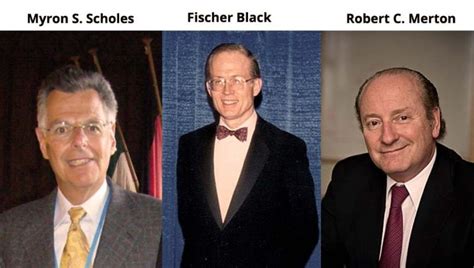
Black-Scholes Partial Differential Equation Usage
The solution to our equation above, under the boundary conditions (the value of our call at expiration time is the profit of the underlying security minus the strike price), is the tried and true Black-Scholes model. We will go this extra step in the next (and final) post in this series.
Financial Interpretation of the PDE
The key insight behind our PDE is that if we disregard transaction costs, we can perfectly hedge our call option at a given time by buying and selling the underlying asset (the short stock in our portfolio ) in just the right way to completely eliminate risk. If this combination exists, then there is an exact way to price the option in order to have our "riskless" portfolio.
We can also interpret the initial 2-sided form:
The left-hand side consists of a time decay term and is called theta () and a term denoting the convexity of the derivative value with respect to the underlying value which is called gamma .
The right-hand side is the riskless return from a long position in the derivative and a short position consisting of shares of the underlying security .
The key insight is that the right-hand side is riskless, so we can represent a riskless portfolio as a sum of and .
For an option, is typically negative since as time runs out on the option it usually loses value. is typically positive, so it reflects the gains in holding the option. The equation states that over any infinitesimal time interval and offset each other such that the result is a return at the riskless rate.
Next time
We wrap up this series by deriving the Black-Scholes formula
Extra Notes
- Note [1][back]
More on call options: Investopedia's primer. It's also helpful to review put options alongside calls: put option overview.
- Note [2][back]
This derivation uses the common form of Itô's lemma:
- Note [3][back]
A long position means the investor owns the instrument; a short position means they owe it and plan to buy it later. See this explainer for more detail.
- Note [4][back]
The money market account here replicates earning the risk-free rate , assuming no arbitrage opportunities exist. Under that assumption we can treat as the risk-free return.
- Note [5][back]
A European derivative only allows exercise on the expiration date, unlike American options (any day up to expiry) or Bermudan options (specific dates before expiry).
Example: hold an option on 100 shares at a $100 strike expiring in one month, priced at $10 per option (total $1000). If the stock trades at $150 on expiration, exercising yields $50 of intrinsic value per share minus the $10 premium, for $40 net per share or $4000 in total.